Showing 45–48 of 247 results
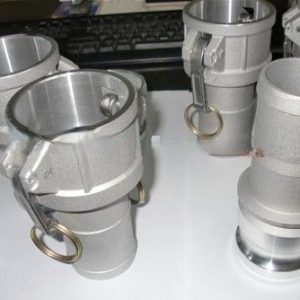
Quality control in precision casting is a fascinating—and crucial—process, don’t you think? I mean, when you think about how critical precision components are in industries like aerospace, automotive, or even medical devices, the importance of strict quality standards and thorough checks really comes to the forefront. Honestly, we’re talking about parts that could mean the difference between success and failure in high-stakes environments.
So, let’s break down the quality control process a bit. At the very beginning, you’ve got the dimensional checks. These are the baseline inspections that ensure the casted parts conform to the design specifications. I find that using tools like calipers, micrometers, and gauges is super common for this kind of work. I’ve seen instances where even the slightest deviation—say, a few thousandths of an inch—can lead to significant issues later on, especially in assemblies where tight tolerances are critical.
Now, once you’ve wrapped up the dimensional checks, you might think you’re good to go, but there’s a lot more. That’s where Non-Destructive Testing (NDT) kicks in. NDT ensures that the material integrity is up to par without damaging the part itself. From what I’ve observed, two common methods in precision casting are X-ray and dye penetrant testing, and each has its own nuances and limitations.
Let’s start with X-ray testing. This technique is really helpful for identifying internal defects like voids, inclusions, or cracks that you just can’t see on the surface. I remember a time when a client’s casting had a hairline fracture that would have never been noticed until it failed in service. The X-ray caught it, saving the company from a potential disaster. However, the downside? Well, it’s not the most accessible option—it’s costly and requires specialized facilities and expertise. Plus, interpreting X-ray images can get pretty complex.
Then, there’s dye penetrant testing—honestly, I think this method is one of the most user-friendly options available. You apply a penetrant to the surface, and after a dwell time, you wipe it off and put on a developer. The dye seeps into any cracks and highlights them. I find that it’s particularly effective for detecting surface defects, like misalignment or shrinkage porosity. It’s relatively inexpensive and can be conducted almost anywhere, which makes it a great choice for many situations. Just make sure to follow proper cleaning procedures before and after testing to avoid cross-contamination.
However, there’s a catch with dye penetrant testing, too. It’s not effective for subsurface defects, so it can be somewhat misleading if you’re relying solely on it. In my experience, using it in conjunction with other methods, like X-ray or ultrasound, really provides a more comprehensive view of a part’s integrity.
In wrapping this up, quality control in precision casting is multi-faceted and requires careful consideration of various techniques to ensure that the final product meets the required standards. It’s about combining dimensional checks with NDT methods—think of it as building a safety net. You want to catch any potential issues before they create a big problem down the line. So, what’s your take on these processes? Have you had any experiences where quality control really made a difference?
No responses yet