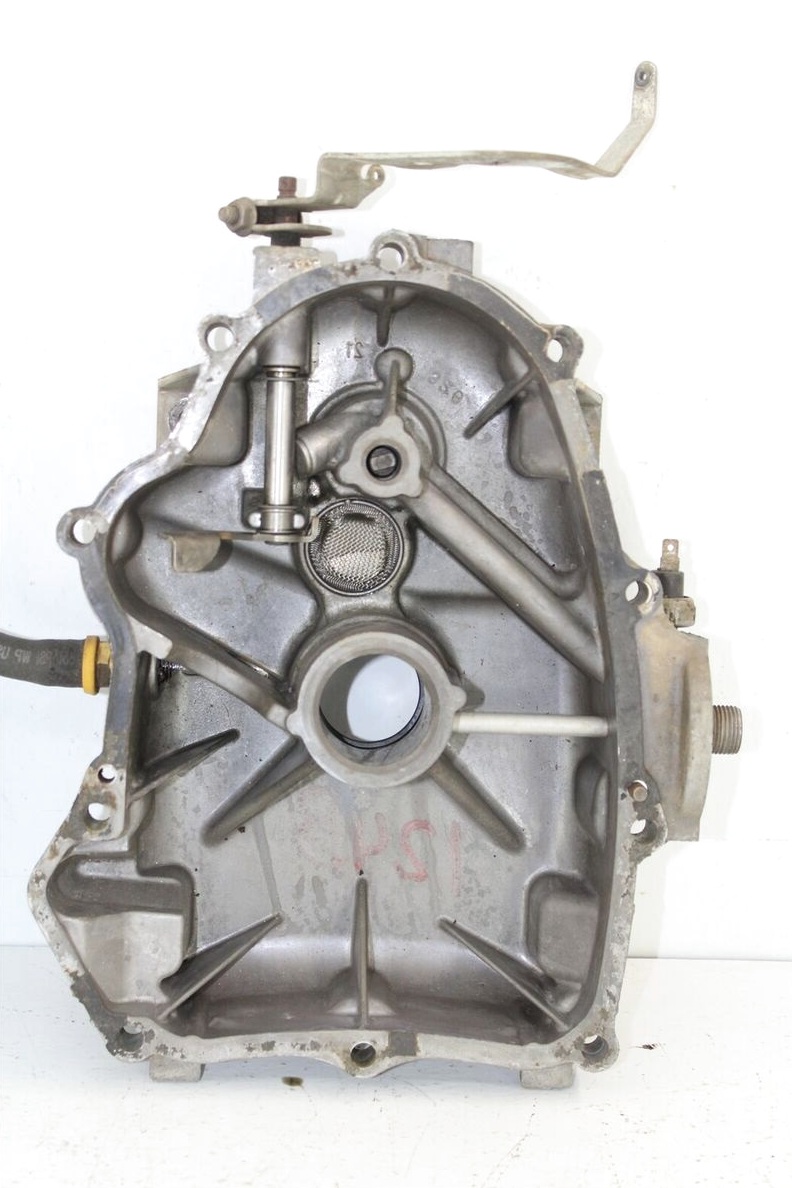
Walk through any manufacturing facility, and you’ll hear the roar of CNCs, the stamp of presses, and the whirl of 3D printers. They’re the loud, celebrated heroes of modern production. But in a quieter corner, there’s an ancient art form that still outmaneuvers them all when it comes to conquering impossible geometry. It’s not just a process; it’s a kind of alchemy, turning wax and fire into engineering masterpieces.
Investment casting, or the “lost-wax” process, doesn’t just make parts. It breathes life into designs that other methods simply wave a white flag at. It’s the key to unlocking a hidden world of geometry. Let’s pull back the curtain on five of these elusive features.
1. The Seamless Hollow: Internal Cavities Without the Assembly
The Feature: A completely enclosed, hollow cavity inside a solid metal component. Think of a turbine blade with intricate internal cooling passages, or a medical implant with a sealed, buoyant chamber. There are no assembly lines, no welds, no braze joints. It’s just… born that way.
Why Others Can’t Compete:
- Machining: A CNC mill can’t make a U-turn inside solid metal. It can create deep pockets, but a truly sealed internal void? Impossible.
- Injection Molding: While great for hollow plastic parts, it struggles with the uniform wall thickness and high melting points required for these metal applications.
- 3D Printing (DMLS): This is the only real contender. It can create amazing internal channels. However, it often leaves a rough, “stair-stepped” interior surface that can hinder fluid flow or trap contaminants, and removing unused powder from complex internal networks is a notorious challenge.
The Investment Casting Magic: The secret is the sacrificial wax core. A precise wax model of the internal passage is created first. This gets encapsulated in the ceramic shell. When the hot metal is poured, it vaporizes the wax, perfectly filling the space it once occupied and leaving behind a pristine, smooth-walled cavity. It’s a one-step process for a two-material problem.
2. The Vanishing Draft: Undercuts and Re-Entrants with Zero Compromise
The Feature: A pronounced undercut, negative taper, or re-entrant angle on a part. This is geometry that would mechanically “lock” a part into a traditional mold, making ejection impossible.
Why Others Can’t Compete:
- Die Casting & Sand Casting: These require draft (a slight taper) on all surfaces perpendicular to the parting line. Without it, the part is stuck for good. Designing out draft means designing out these processes.
- Machining: While a 5-axis mill can access undercuts, it does so through a series of complex, time-consuming setups and tool paths, driving cost and time through the roof, often with tooling access limitations.
The Investment Casting Magic: The ceramic shell is the ultimate disposable mold. It doesn’t need to open. It doesn’t need ejector pins. After the metal solidifies, the shell is literally smashed away with a hammer or vibratory media. The mold’s destruction is the final step, freeing the part and every single one of its geometric quirks without a second thought.
3. The Organic Channel: Winding, Tapering, Cross-Sectional Conduits
The Feature: A fluid or gas passageway that isn’t a straight drilled hole. It winds, it curves, it tapers from a wide inlet to a narrow jet, and it might even branch into smaller, secondary channels. It mimics the efficiency of natural systems, like blood vessels or plant stems.
Why Others Can’t Compete:
- Drilling/Tapping: Obviously limited to straight lines.
- Machining with EDM: While capable of complex shapes, it is an extremely slow, sequential process. Creating a long, winding internal channel is economically unfeasible.
- Brazed Assemblies: You can make the channel by welding several pieces together, but every joint is a potential failure point, a site for corrosion, and a disruption to smooth flow.
The Investment Casting Magic: Once again, the wax core is the hero. It can be injection-molded into an incredibly complex, organic shape. This single, monolithic wax piece defines the entire convoluted pathway in one go. The final cast part has a continuous, seamless internal surface, optimized for laminar flow and structural integrity.
4. The Unmachinable Fillet: The “Cusp-Free” Transition
The Feature: A perfectly smooth, radiussed transition between two part features where a sharp corner would be a stress concentration nightmare. We’re not just talking about a standard rounded edge. This is a large, complex, variable-radius fillet that blends a thin airfoil into a massive mounting hub, with not a single tool mark in sight.
Why Others Can’t Compete:
- CNC Machining: A ball-nose endmill can create a fillet, but it will always leave behind microscopic cusps or scallops. Achieving a truly perfect, cusp-free, Class-A surface on a complex 3D fillet requires extensive, skilled hand-polishing, which alters dimensions and costs a fortune.
The Investment Casting Magic: The surface of the wax pattern is the surface of the final part. By using a highly polished, precision-machined mold to create the wax pattern, the resulting fillets and blends are inherently perfect and continuous. The ceramic shell faithfully replicates this smoothness, delivering a metal part that often needs no finishing at all in these critical transition zones.
5. The Monolithic Mosaic: Combining Multiple Parts into One
The Feature: A single, unified component that would otherwise have to be assembled from a dozen separate pieces—brackets, housings, nozzles, and flanges all forged into one inseparable entity.
Why Others Can’t Compete:
- Traditional Fabrication: The default solution is to “make it and assemble it.” This introduces a long list of headaches: fasteners, gaskets, alignment issues, weight penalties, and multiple potential failure points.
- Welding/Joining: While it can consolidate parts, welding introduces heat-affected zones (HAZs) that weaken the base material and cause residual stresses and distortion.
The Investment Casting Magic: Investment casting thinks in terms of the whole, not the sum of parts. The wax pattern is assembled from multiple smaller waxes, creating a single, complex “tree.” This allows designers to think boldly, collapsing entire assemblies into one intrinsically strong, leak-proof, and lightweight structure. It’s the ultimate exercise in Design for Manufacture (DFM), where complexity is not a cost driver but a inherent benefit of the process.
In the end, investment casting isn’t just another item in the manufacturing toolbox. It’s the master key for the locks that other tools can’t pick. It’s for the geometries that live not just on a CAD screen, but in the hidden, efficient, and elegant world that only fire and ceramic can reveal.
No responses yet