Showing 1–4 of 247 results
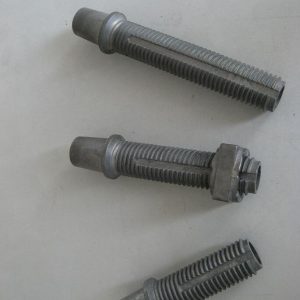
This is where the real engineering trade-offs happen—moving from material selection to process selection. I’ve sat through countless design reviews where the manufacturing method was assumed, not chosen. And that’s a recipe for blowing the budget.
Let’s be clear: Precision casting (investment casting) isn’t “better” than machining or forging in a vacuum. It’s a superior solution for specific, often overlapping, sets of problems. Choosing it is about playing to its unique strengths while respecting its constraints.
Think of it as a strategic design tool, not just a production step.
The Core Advantage: Unlocking Geometrical Freedom
This is the number one reason I steer clients toward investment casting. It allows you to design the optimal shape for the function, not the optimal shape for the machine tool or forging die.
Concrete Examples From My Experience:
- Internal Cooling Passages in Turbine Blades: You simply cannot machine a serpentine, internal cooling channel in a solid superalloy blank. You cast it, core and all, in one piece.
- Complex, Multi-Directional Parting Lines: A component with undercuts, backdrafts, and features facing every which way might require 4 or 5 separate machining setups or a multi-piece forging. You can often cast it as a single, integral piece.
- Organic, Load-Optimized Structures: Think of a bicycle crank or an orthopedic implant with lattice structures. Casting excels at producing these smooth, topology-optimized forms that look like they grew that way—because, in a sense, they did.
The Head-to-Head Breakdown: A Practitioner’s View
vs. Machining from Bar Stock or Billet
- The “Buy-to-Fly” Ratio: This is the killer argument. Machining a complex aerospace bracket from a solid titanium block can result in 90% of the expensive material ending up as chips on the floor. Casting gets you much, much closer to net shape. You’re saving not just material cost, but also all the machining time to remove it.
- Grain Flow & Anisotropy: Here’s a nuance machinists don’t always consider. A machined part has a grain structure inherited from the stock material, which may not be aligned with the part’s stress paths. A well-designed casting can have a uniform, fine-grained microstructure throughout, with isotropic properties.
- The Complexity Threshold: For a simple bushing or a flat plate with a few holes, machining wins on speed and cost every time. But there’s a tipping point. I use a rough rule of thumb: If your part requires more than three major machining setups, or if the “buy-to-fly” ratio is worse than 3:1, casting deserves a hard look.
- The Hidden Cost of Hard Materials: Trying to machine a fully heat-treated tool steel or a nickel superalloy from solid? The tool wear is astronomical. Casting to near-net shape in the final material saves a fortune in carbide end mills and inserts.
vs. Forging
- Strength vs. Complexity: Forging wins on raw, directional mechanical properties. The grain flow is worked and aligned, making it superb for a crankshaft or a high-stress connecting rod. But the geometries are severely limited. Forging is about simple, “pancake-like” shapes.
- The Draft Angle Tax: Forgings require significant draft angles (3-7°) to eject from dies. Castings can have near-vertical walls (as little as 1-2°). That can be a huge mass savings and design freedom.
- Thin Sections & Integration: You cannot forge a thin, integral flange next to a thick hub the way you can cast it. Forging also struggles with incorporating internal features—you’d need multiple pieces welded or assembled.
- The Tooling Cost Cliff: A complex forging die is extremely expensive and time-consuming to produce. For low-to-medium volume runs (say, 50 to 10,000 pieces), the lower tooling cost of casting wax patterns is a massive advantage. The break-even point is often higher than people think.
The Investment Casting Sweet Spot: When I Recommend It
In my practice, I advocate for precision casting when two or more of these conditions align:
- The geometry is complex (internal features, multi-axis contours, thin walls adjacent to thick sections).
- The material is expensive or difficult to machine (titanium, cobalt alloys, hard martensitic stainless steels).
- The required mechanical properties are isotropic (not needing the directional strength of a forging).
- The production volume justifies the pattern tooling but doesn’t justify a multi-million-dollar forging die line (typically ~100 to 50,000 parts).
- Surface finish and dimensional accuracy are critical right out of the mold, reducing secondary grinding/polishing.
The Reality Check: It’s Not Magic
A good engineer must also know the limitations:
- Upfront Lead Time: You need to design and fabricate pattern tooling (often aluminum or steel). This adds weeks to the project start.
- Size Limitations: While large castings exist, there’s a practical limit (roughly a few feet in any dimension for high-precision work).
- Process Knowledge is Critical: A poorly gated casting will have defects. You must partner with a foundry you trust. This is non-negotiable. I’ve seen beautiful designs ruined by a foundry that cut corners on filter placement or pouring temperature.
My Actionable Advice:
- Start with a “Process-Agnostic” Design: Sketch the ideal shape for function and load. Then see which process can achieve it most economically.
- Get a Comparative Quote Early: Send your ideal print to a reputable casting house and a machine shop. Ask for a piece-price quote at your target volume, including all tooling. The numbers will tell a very clear story.
- Design for the Process: If you choose casting, collaborate with the foundry engineer. They’ll suggest subtle draft, fillet radii, and gating locations that mean the difference between a high-yield success and a scrapped part.
Bottom Line: Don’t think of precision casting as an alternative to machining or forging. Think of it as enabling a design that would be prohibitively expensive or simply impossible to make any other way. Its advantage isn’t just manufacturing—it’s liberation for the designer.
Is there a specific component you’re evaluating this for? The best choice always lives in the details of the part itself.
 English
  French
  German
  Italian
  Arabic
  Hindi
Hindi  Spanish
  Portuguese
  Russian
  Chinese
  Japanese
  Danish
  Persian
  Hebrew
  Hungarian
  Korean
  Dutch
Dutch
No responses yet